Coupon directory
Codes somebody actually tried before you did.
We take codes through the merchant's own checkout, write down what came off the total, and put the date on the page. 3,279 offers across 813 stores — plus the ones we pulled when they stopped working.
- Test date shown on every code
- Expired codes kept visible
- No account needed
Merchants people check most
All stores The Electric Spokes
Up to 10% off
1 codes · 4 deals
The Electric Spokes
Up to 10% off
1 codes · 4 deals
 Biotox Gold
Up to 70% off
1 codes · 6 deals
Biotox Gold
Up to 70% off
1 codes · 6 deals
 Literature and Latte
Up to 45% off
3 codes · 6 deals
Literature and Latte
Up to 45% off
3 codes · 6 deals
 VR Cover
Up to 30% off
0 codes · 6 deals
VR Cover
Up to 30% off
0 codes · 6 deals
 Tick Data Suite
Up to 20% off
1 codes · 5 deals
Tick Data Suite
Up to 20% off
1 codes · 5 deals
 Abviewer
Up to 35% off
0 codes · 4 deals
Abviewer
Up to 35% off
0 codes · 4 deals
 HelpNDoc
Up to 60% off
0 codes · 5 deals
HelpNDoc
Up to 60% off
0 codes · 5 deals
 Scientis Pharma
Up to 45% off
0 codes · 4 deals
Scientis Pharma
Up to 45% off
0 codes · 4 deals
 Lookeen
Up to 20% off
0 codes · 5 deals
Lookeen
Up to 20% off
0 codes · 5 deals
 ArtStation Marketplace
Up to 30% off
0 codes · 6 deals
ArtStation Marketplace
Up to 30% off
0 codes · 6 deals
 Filter Forge
Up to 80% off
1 codes · 5 deals
Filter Forge
Up to 80% off
1 codes · 5 deals
 Sundog Scale Studio
Up to 20% off
1 codes · 3 deals
Sundog Scale Studio
Up to 20% off
1 codes · 3 deals
Browse by what you are buying
Software & SaaS
249 storesSubscription tools for marketing, design, analytics and operations. We track renewal pricing and annual-plan discounts, which is where most of the real savings sit on software.



Health & Fitness
156 storesEquipment, supplements and training programmes. Shipping thresholds often matter more than the headline percentage here.
Fashion & Apparel
58 storesClothing, footwear and accessories. Sale-item exclusions are common, so we record the exclusions a code carries.



Courses & Education
53 storesOnline courses, bootcamps and coaching programmes. Discounts are usually launch-window or cohort-based rather than always-on.



Electronics & Tech
50 storesConsumer hardware, components and accessories. Price-match policies sometimes beat the coupon — we say so when they do.


Finance & Business
50 storesAccounting, invoicing, payroll and legal services. Discounts are usually first-year only; the renewal rate is stated where we can confirm it.


Marketing & SEO
36 storesKeyword tools, outreach platforms, email senders and rank trackers. Watch for seat-based pricing where a percentage code applies to the first seat only.




Ecommerce & Selling Tools
34 storesResearch, repricing and listing tools for Amazon, eBay, Etsy and Shopify sellers. Trials and founder plans change often here, so codes are checked more frequently than the site average.



Crypto & Mining
26 storesMining operating systems, exchanges, wallets and monitoring dashboards. Offers in this category move fast and expire without notice.

Home & Garden
26 storesFurniture, appliances, tools and outdoor gear. Free-shipping thresholds and bulky-item surcharges are noted where merchants publish them.



Automotive
21 storesParts, wheels, accessories and workshop supplies. International shipping and import duty are the deciding factor on many of these merchants.



Design & Creative
17 storesLogo makers, stock libraries, video editors and banner tools. Many offer free tiers, so we flag which codes apply to paid upgrades only.



Food & Drink
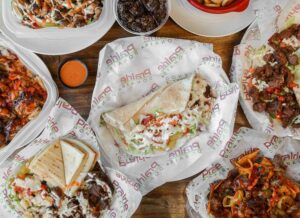
17 storesMeal kits, speciality groceries and subscriptions. First-box discounts dominate this category and rarely repeat.


Hosting & Domains
10 storesShared, VPS and managed hosting plus domain registrars. Introductory pricing on hosting rarely renews at the same rate — we note the renewal price wherever the merchant publishes it.



Travel
7 storesBooking sites, insurance, luggage and transfers. Date restrictions and blackout windows are recorded alongside each code.


Pets
2 storesFood, supplies, insurance and grooming. Subscribe-and-save often outperforms a one-off code over twelve months.

Methodology
What "verified" means here
Most coupon sites publish every code they find. We publish what we have tested, and we show you the date. 0 codes have been retired from this site because they stopped working.
Read the full process-
01
We put it through checkout
A code is only marked verified after someone here has added a qualifying item to the cart on the merchant's own site and watched the total change.
-
02
We record what it actually did
The percentage or amount, the minimum spend, the plan tiers it covers, and any exclusion the checkout reveals. If a code did nothing, we say so.
-
03
We date the check, not the page
The date you see is the date the test happened. We do not restamp pages with today's date to look fresh.
-
04
Readers keep us honest
Every code carries a "did it work?" control. Enough failure reports and the code is retired to the expired list, where it stays visible.
Before you use a code from here
Do I have to pay anything to use these codes?
No. GraphEffect is free and there is no account to create. We earn a commission from merchants when a purchase follows a click from here, which is what funds the testing. Your price is the same either way.
What does the date on a coupon mean?
It is the day someone here last took that code through the merchant's checkout and confirmed the discount applied. It is not the day the page was edited. A code with no date has not been tested, and we label it that way rather than implying otherwise.
Why do you show codes that have expired?
Because deleting them quietly would hide the fact that we removed them. 0 codes sit in our expired lists. Keeping them visible also tells you what a merchant's discounts usually look like, which is useful when you are deciding whether to wait for the next one.
A code did not work for me. What now?
Use the "Did it work?" control on that coupon and pick No. That pushes it into our recheck queue immediately. Codes that collect enough failure reports are retired automatically. Reader reports are the fastest way dead codes come down.
Why does a percentage code sometimes take less off than it says?
Most commonly the code applies to a subset of the order — the first seat on a seat-based plan, full-price items only, or the base plan and not add-ons. Where the merchant's checkout reveals a restriction like that, we record it under the coupon.
How do you decide which merchants to cover?
Mostly reader demand and search interest. Having an affiliate programme makes a merchant easier for us to test repeatedly, so those tend to get deeper coverage — we would rather say that plainly than pretend coverage is neutral.
Who is behind this site
GraphEffect has been publishing discount codes since 2025. Pages are written and maintained by a named editorial team, each merchant page carries a byline, and coupon records carry the date of the last checkout test rather than the date the page was edited.
We are funded by affiliate commission, which we disclose on every page that carries a commercial link. Commission affects which merchants we can test most often. It does not affect whether we report a code as working — a code that fails at checkout is marked as failing regardless of who pays us.